Released: 2013
Designers: Davey Wreden & William Pugh
Designers: Davey Wreden & William Pugh
Spatial Design: Repetition
Corridor -> room -> corridor -> room.
This will assuredly make for an uninteresting and predicable game. The Stanley Parable, on paper, is just that. A first-person, walking simulator navigating through an empty office block where there are no NPCs, no shoot-outs, no enemies, and only the disembodied voice of the narrator as company. The narrator guides the player (as the titular Stanley) through a maze of corridors and offices to try and discover what has caused Stanley’s co-workers to disappear. By following - and not following - the instructions given by the narrator, the player can experience a wealth of different conclusions which, once reached, will restart the game back to Stanley’s office and the player will begin their adventure again.
However, with each restart the adventure changes slightly. Here I have shown a basic floorplan of the first areas of The Stanley Parable. The red dot is Stanley’s Office and following the green line will lead the player to their first choice: Right or Left.
So how does the level design affect the player choices?
When playing the game the player becomes acutely aware of the layout of the levels.
However, with each restart the adventure changes slightly. Here I have shown a basic floorplan of the first areas of The Stanley Parable. The red dot is Stanley’s Office and following the green line will lead the player to their first choice: Right or Left.
So how does the level design affect the player choices?
When playing the game the player becomes acutely aware of the layout of the levels.

Stanley’s office moves into the bullpen, the bullpen moves into the corridor, the corridor to the room with two doors. The left door will take the player to another corridor and the right will lead them to the break room.
The levels are laid out so everything is visible to the player. The doors will swing open for them, chairs will block inaccessible locations and with the lack of a jump mechanic the player cannot reach areas that they shouldn’t. So firstly we shall take the most interesting part of a level, the broom closet (?). Below we see the broom closet, the picture on the left is an accessible broom closet and the one on the right is blocked.
The levels are laid out so everything is visible to the player. The doors will swing open for them, chairs will block inaccessible locations and with the lack of a jump mechanic the player cannot reach areas that they shouldn’t. So firstly we shall take the most interesting part of a level, the broom closet (?). Below we see the broom closet, the picture on the left is an accessible broom closet and the one on the right is blocked.
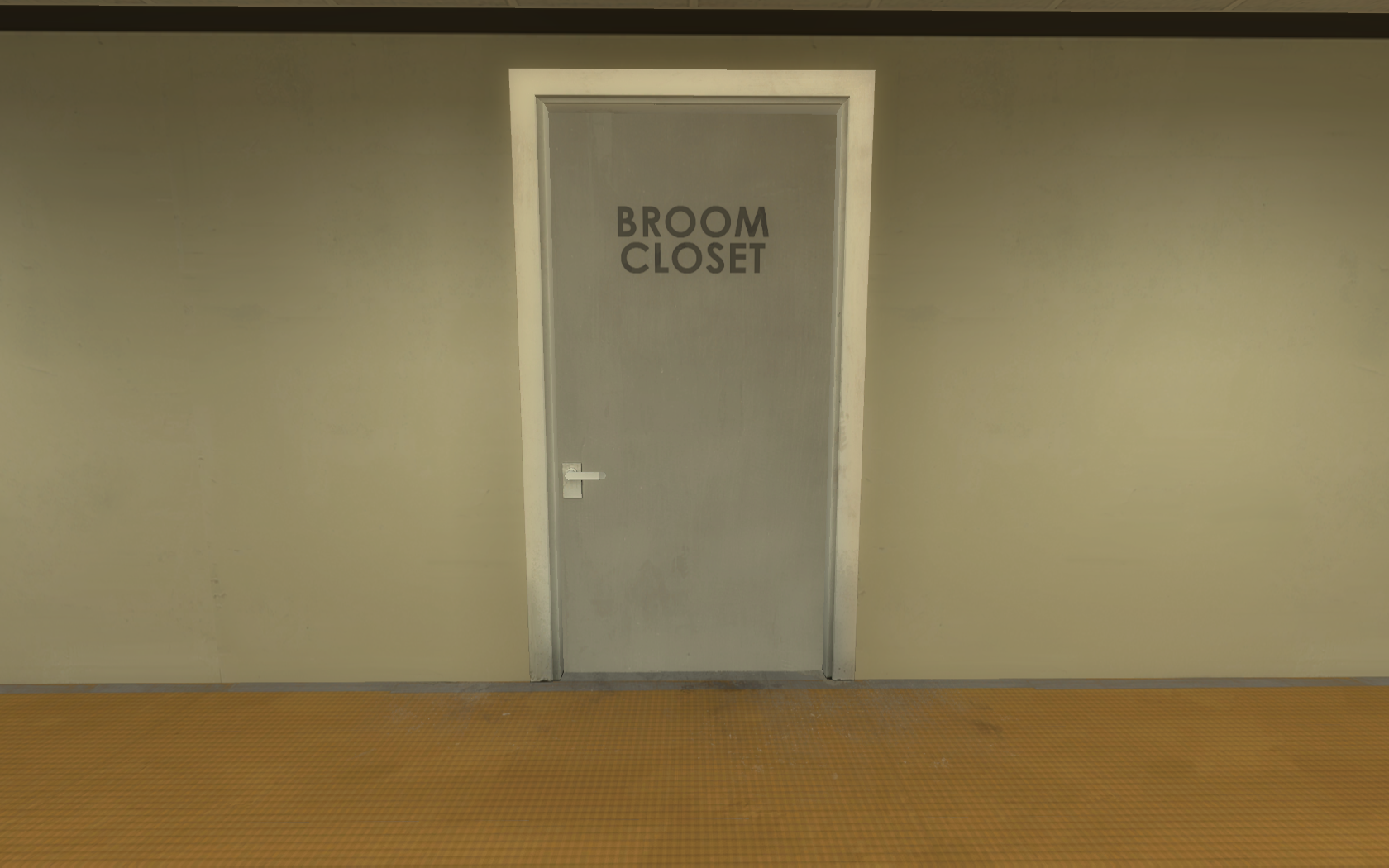
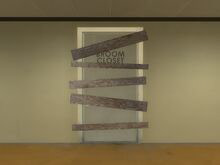
This has happened because the player has completed one of the endings, known as the Broom Closet Ending. This ending has the player standing in an empty broom closet and then being reset to the beginning. If the player returns to the broom closet after this ending, the narrator will again restart the adventure, this time however, if the player goes to the broom closet they will find that the door has been boarded up and is now inaccessible. This is an obvious example of how the levels change with each restart and clearly shows the player that they are not just playing the same level over and over again, thus prompting them to find more discrepancies, of which they will find plenty. Doors that were once locked become unlocked and corridors that turned right now lead to a doomsday machine.
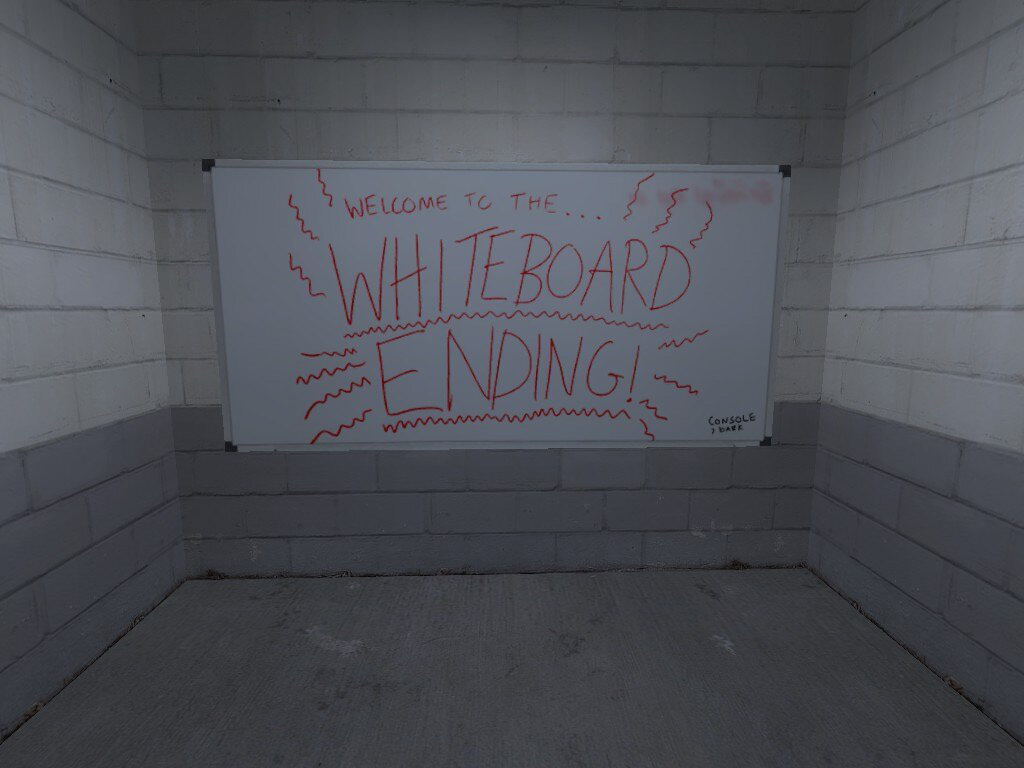
The level design in The Stanley Parable utilises the mundanity of a repetitive office to its advantage. The designers have been able to hide endings in obvious places. One ending (which I still haven’t been able to access) is The Whiteboard Ending. This ending involves Stanley entering the office next to his own - Office 426 - and finding a whiteboard and then the game restarting. This ending is achieved only if the player realises the lighting in the office has changed to a blue-ish tone. The door to Office 426 is the first the player encounters outside of Stanley’s office and has always been locked. This simple change in lighting tells the player that something is different, but everything looks the same. If the player simply repeats their initial actions then they could discover this ending, The Stanley Parable encourages repetitive gameplay.
Spatial Design: Denial and Reward
By using a method of level design generally not used the designers have been able to make a compelling argument for dull and repetitive. They have created hiding places for interesting endings and when something different does happen it is even more exciting. The Stanley Parable is full of cases of Denial and Reward. Denial and reward used in architecture is when the architect gives a person a view of their destination and allows them to feel like they are progressing. In The Stanley Parable progression is shown in a different manner. As the player does not know what the destination or aim of the level is then revealing progress is done in a different way. As has been said the player restarts every time in Stanley’s office and the player then makes different decisions which consequently have different outcomes. One of these outcomes is The Stanley Parable Adventure Line.

This new ending is shown to the player by a thick yellow line on the floor that the player follows through the level. This level reveals itself if the player has continuously not followed the narrator’s instructions, therefore the narrator forces the player to follow this line by closing doors to keep them on this path.


These narrative differences and small level design tweaks are what let’s the player know that they are progressing through the game - even though there is no end. As is the way with this game once the player reaches the end of the adventure line they are reset back to Stanley’s office, however, as with the use of repetition the player feels enlivened to try and discover different endings.
The Stanley Parable is an interesting and slightly unnerving game which critiques contemporary games through the medium of choice - or at least an illusion of freewill - the narrator becomes frustrated when the player does not follow their instructions. Unlike other games The Stanley Parable does not follow a linear gameplay and allows the player to explore and go against the grain of the intended narration. The player is then rewarded with a wealth of Easter eggs, endings and environments. The player can find alternate games within The Stanley Parable, such as a new Portal Test Chamber.

Though not a game where days of your life can be dedicated as you will begin to repeat endings and slowly discover that there is a finite number of endings, The Stanley Parable utilise mundane and everyday architectural and spatial design techniques to the advantage of the level designer to create an interesting game which leaves the player wanting and searching for more, making them believe that there must be an elusive ending that they are still to discover.
